



|
| Ayurveda Case studies from IAAM |
Name of medical problem: Back Pain/ Sciatica
Name of medical problem: Paralysis/ Hemiplegia
Name of medical problem: Psoriasis
Name of medical problem: Rheumatoid Arthritis
Name of medical problem: Parkinsonism/ Parkinson's disease
Name of medical problem: Back Pain/ Sciatica
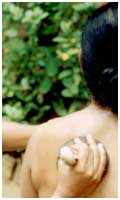
Ayurveda Name: Gradhrasi
Type of illness: Back pain experienced in the region of the buttocks, back of the thigh and the leg. Patient experiences difficulty in walking. The pain is associated with the Sciatica Nerve which is part of the nerve system that controls the muscles of the back of the knee and lower leg, and provides sensation to the back of the thigh, part of the lower leg and the sole of the foot.
Causes of illness: According to Ayurveda philosophy, the human body consists of three doshas - Vatha, Pitha and Kappha. An imbalance of the three Dosha's leads to disease. Sciatica is usually caused by an increase or aggravation of "Vatha Dosha".
Name of medical problem: Paralysis/ Hemiplegia
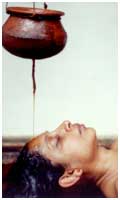
Ayurveda term: Pakshagatha
Type of Illness: Complete or incomplete loss of functioning of nerves, to a part of the body or whole of the body is called paralysis. The part of the body that is affected looses its sensations and/or movements.
Cause of illness: Paralysis is the result of stroke (Cerebral-Vascular accident).
According to the great Ayurveda books (Samhitha), Paralysis is the main disease described under the vatha diseases.
Paralysis occurs when vatha dosha aggravates in the brain. Strenuous exercise, continuous exposure to stress, sleeplessness or obstruction of channels present in brain leads to aggravation of the vatha dosha. Aggravated vatha dosha can dry up the nerves with adverse affects on the opposite side of the body.According to western medical views contributory causes to paralysis include:
- Ischemic cerebral lesion, which is due to obstruction of blood vessel present in the brain with fat particles, blood clot, air bubble or cholesterol plaques (atheros sclerosis).
- Hemorrhagic cerebral lesion is due to hypertension (high blood pressure) or aneurysm or due to trauma.
- The centre affected by the lesion is responsible for the paralysis of the corresponding part in the body. The following risk factors are mentioned in western medicine as being possible predisposing factors to paralysis.
- Hypertension
- Diabetes mellitus
- Obesity
- Family history of cigarette smoking,
- Hyperlipidaemia
- Using oral contraceptives.
Specific symptoms:
- Loss of sensation
- Impairment of voluntary movements
- Impairment of speech
Ayurveda Treatments:
Paralysis can be successfully treated with the combination of internal medicine and external treatments. Treatment usually varies with the patient's condition.Internal Treatment:
- Herbal decoctions to be taken orally. In the beginning Thri Katakadi decoction is given. It contains 12 herbs and it purifies the obstructed channels in the brain. But if patient is having Kapha dosha, the prescribed decoction may change.
- Seetharama: Little herbal pills called Seetharama are also given along with this decoction to prevent fever and to balance the dosha.
- Chandra Kalka: Orally taken medicinal herbal paste called Chandra Kalka is given with a special herbal tea for the purpose of reducing hypertension and to purify the obstructed blood vessels.
- Ma-Ul-Asel: Special preparation called ma-ul-asel (contains honey and water) given for preventing clot formation.
- Ekaveriya pills: If patient has hypertension Ekaveriya pills containing Rauvolfia serpentina and herbal wine called Bala arishtaya is given to be take orally.
- Herbal teas (Anupana): If patient has high serum cholesterol levels, it can be corrected through special herbal teas (Anupana).
External Treatments:
If patient does not have any kapha dosha aggravation or any heart disease, following treatment can be administered.- Shiro Abhyanga (special head oil application)
- Sharera Abhyanga (special body oil application)
- Shirodara treatment (special head oil application)
- Sarvangadara treatment (Treatment is done by applying small steam-heated bundles of herbs tied in cotton bags and pressed gently on aching parts of the body.)
- Pinda sweda treatment (Mild oil application with the help of special milk rice medicinal bundles made of cheese cloth.
Prospects of cure:
Early stages in Paralysis (particularly before 1 year has lapsed) are curable. When paralysis occurs in the very old or in infants it is hard to cure.
Name of medical problem: Psoriasis
Type of illness: Psoriasis is a severe skin disease.
Causes of illness: according to Ayurveda this skin condition is due to blood impurities. These impurities can be due to many causes. They are also associated with excessive hot foods, sour and salty taste foods and mental stress.
Specific symptoms:
- Patient experiences itching or scratching.
- When scratching takes place pink skin patches appear.
- This is most common in elbow and knees but may occur in any parts of the body.
- Patient may experience burning sensation with watery discharge or blood from affected skin area
Ayurveda Treatments
Internal Treatments:
- Pancha Tikta Ghee: Pancha Tikta Ghee is given to the patients. It contains mainly five bitter herbs and it keeps the bowel movement normal, promotes digestion, and purifies the blood. Dosage starts with one teaspoon twice daily with a cup of warm milk before meals.
- Verechana Karma (Purgation therapy): is very effective for the treatment of psoriasis. Oral medicines are administered to induce purgation. It purifies the blood and expels toxic substances, which cause psoriasis.
- Chandraprabha Vati that contain Thippili (Piper longum), Gammiris (Pipper nigram), Ginger (Zingber offcinale), Kaladuru (Cyperus rotundus) etc. is taken orally two tablets, twice a day. It is prescribed for its diuretic action to purify the body.
- Manibadra powder is an orally taken herbal powder, which has a blood purifying action. Dosage is one tea spoon twice daily.
- Decoction containing Aswenna (Alysicarpus veginalis), Polpala (Aerva lanata), Sarana (Trianthema decandra) etc. are given for balancing the Pitha dosha. After 7 days another type of decoction is given.
External Treatments:
- Green gram powder: External application of a paste of green gram powder with water on to the affected area.
- Shiro Abhyanga and Shareera Abhyanga also recommended.
- Herbal medicinal baths.
Prospect of cure:
Disease can be cured if treatment is taken over a period of time.
Name of medical problem: Rheumatoid Arthritis
Ayurveda Name: Gambheera Vatha Raktha
Type of illness: Rheumatoid Arthritis is a disease affecting primarily the joints of the hand and feet, which become swollen and painful. If not treated in its early stages, it may result in deformity and difficulty in movement.
Causes of illness: Ayurveda states that dietary factors, alcohol abuse, mental stress, and obesity are some of the causes of Rheumatoid Arthritis. Dietary factors include excessive use of sour, salty, pungent tasting foods, spicy food such as chili and oily foods. Due to the above causative factors Vatha dosha and Pitha dosha aggravate and cause impurities in the blood.
The toxic substances, which are absorbed into the blood, collect in hands, legs and finger joints due to gravity.
In the beginning joints get swollen, painful and stiff. This is very prominent with the little joints in hands, legs and fingers. Redness of skin can be seen on the joint. Sometimes itching and burning sensation is experienced and perspiration may increase or decrease.
If not treated immediately, the muscles, ligaments, synovial membrane of the joint remains swollen and joints become extremely painful. In the next stage, the cartilage of the joint can get damaged and calcium deposition can take place. This leads to deformity of the joint. The disease can then spread to other joints.
Specific symptoms:
- In the beginning the disease affects the small joints in fingers.
- Pain in joints. Pain is at its worst on awakening in the morning and it may decrease with movements.
- Stiffness of muscles around the joints of the finger so that the joint tend to curve. At the beginning, the stiffness is more in the mornings and could be present for several hours.
- Joint swelling
- Fatigue and general malaise, increased or decreased perspiration.
- Later stages - Joint deformity, difficulty in moving the joints, muscle wasting can be seen around the joint.
- Disease then spreads towards the wrist joints, ankle joints, elbow joints, knee joints, shoulders, hip and spine.
Treatment:
Rheumatoid arthritis is treated with a combination of internal and external application of medicine.
Internal Treatments:
- Thripala kawatha: is a decoction, which contains Aralu (Terminalia chebula), Bulu (Terminalia belirica), and Nelli (Phyllauthus embelica). This is given orally, two tablespoons, three times a day. The preparation has mild laxative action and purifies the body.
- Chandraprabha vati: Herbal pills called Chandraprabha vati, which contains many herbs and guggulu. The dosage is two tablets, twice a day. The pills have diuretic action and purify the body.
- Manibadra powder is an orally taken herbal powder, which has a blood purifying action. Dosage is one tea spoon twice daily.
- Special freshly made herbal decoctions: The decoction contains Dummalla (Trichosanthes cucumerina), Katukarosana (Picrorrliza kurrooa), Asparagus roots (Asparagus racemosus), etc. with Eranda oil (oil obtained from seeds of the ricinus communis plant).
After 7 days it is changed into another decoction. These decoctions have mild laxative action, which purifies the impure blood and balances the aggravated Pitha dosha.
- Verechana karma (Purgation therapy) is also recommended for rheumatoid arthritis. Oral medicines are administered to induce purgation. It purifies the body and balances the pitha dosha.
External treatments:
- Vasthi Karma or Medicated Enema treatment is also used when pain is more prominent. Depending on the stage of the disease, medicated oils or decoctions are administrated.
- Pinda oil: medicated oil namely, Pinda oil, is gently massaged over the affected joints. This oil is prepared with the base of sesame oil, bees wax, welmadata (Rubia cordifolia) etc. it reduces localized pain and burning sensation and balances the Vatha and Pitha dosha.
- Special herbal pastes are also applied to the inflamed and affected joints. This special paste contains red Sandle wood, sesame seeds, seeds of the ricinus communis (Eranda seeds) and milk. This is very good for reducing inflammation and pain.
Prospect of cure:
Disease can be cured in the early stages. When there is any muscle wasting or when joint deformities take place, it is very difficult to cure. The medicine and therapies can however, bring about a reduction in symptoms and pain.
Name of medical problem: Parkinsonism/ Parkinson's disease
Ayurveda name: Kampa Vatha
According to the principles of Ayurveda, Parkinson's disease develops because of aggravation of Vatha dosha in the nerves in the brain. Aggravated Vatha dosha can dry up the nerves with adverse affects. The disease usually develops during middle age or old age. According to western medical views the loss of dopamine - the nerve transmitter is one of the main causes of the disease.
Specific symptoms:
- Patient may develop tremors (shaking) of hands or fingers. This is present before starting work (Movements of fingers like pill rolling). Sometimes this can be seen even in the rest of the body. But once he/she starts to do something, the tremors will stop.
- Patient feels stiffness (rigid) present in muscles.
- When walking, patient cannot turn at once.
Ayurveda Treatments
Internal treatment:
- Usually a set of decoctions (herbal medicinal drinks) is given. At the beginning decoction should contain ingredients to achieve a balance of Vatha dosha and later the decoctions should have nutritious or rejuvenating value. The decoctions contain masha (Undu) - Phaselolus radiatus, Babila - Sida cordifolia etc. and are very effective decoctions
- Dasamula Arishta which contain several ingredients including herbs and roots such as Aswenna, Polpala, Ela batu, Katuwelbatu, Hin nerenchi, Beli, Midi, Thotia, Palol, Et demata and other herbs, are also given orally to balance the Vatha dosha and as a tonic.
- Ashwaganda Choorana - orally taken herbal powder. Dosage, one teaspoon, twice a day with milk. It contains medicinal plant namely Ashwaganda-Withania somnifera, which has mainly a rejuvenating property and acts as a nerve tonic.
External treatment:
Following treatments are also given depending on the patient's condition.
- Shiro Abhyanga and Shareera Abhyanga (special head and body oil application)
- Shiro Dara Treatment (special head oil treatment)
- Pinda Sweda Treatment (Mild oil massage is administered to the patient with the help of special milk rice medicinal bundles made of cheesecloth.
- Shiro Vasti treatment (Keeping oil over the head with the help of special cap)
- Nasya karma (drops inhaled through the nose)
- Rasayana karma (Rejuvenation)
Prospects of cure:
Depends on the severity and complications of the disease. If in the early stages, disease can be retarded, and symptoms can be controlled.
Minimum period of treatment in order to see improvements should be more than four weeks.
 |
|
|
|
| Further reading: |